A brand's second life

Last weekend I was lucky enough to be at Primavera Sound in Barcelona and, as always at festivals, I spent a lot of time people-watching. One of the most interesting parts is exactly that: watching how people move, dress, connect.
Adidas was kind of everywhere. In the crowd, among the sponsors, also on Cameron Winter of Geese. And that’s where this started.
Adidas was born with a clear purpose: sport, performance, competition. The three stripes weren’t a style statement. They came out of a world made of shoes, technical clothing, training and competition.
Then, at some point, the brand stepped outside the imagination it had been designed for. It didn’t abandon sport. It simply started living elsewhere too: on the terraces, in clubs, in pubs, at concerts, in the wardrobes of people who weren’t wearing it only for sport, but to say something about themselves.
That’s how the second life of a brand begins: not the one the company planned, but the one people built.
From performance to belonging
The interesting part of Adidas’s story isn’t that a sports brand became fashionable. The point is that Adidas became meaningful in contexts where sport was no longer the main reason to wear it.
A pair of Adidas on a football pitch communicates one thing. The same pair on the terraces of a stadium, in a pub or on a musician’s feet communicates something different. The product doesn’t change, but the context does, and with it, the meaning.
In semiotic terms, Adidas as a signifier never lost its sporting meaning. The communities that adopted it simply added new layers of sense: football, terraces, hip-hop, mod revival, indie, Britpop. Each context used it differently, but the mechanism was always the same: something designed for performance turned into a sign of belonging.
Subcultures as an unofficial laboratory
One of the most important shifts happens inside British terrace culture between the late Seventies and the Eighties. On English terraces, groups of fans started wearing European sportswear brands not just because they were practical, but because they made it possible to build a new visual code. Adidas, Sergio Tacchini, Fila, Fred Perry, Ellesse, Lacoste, Diadora: brands born for sport became part of a wardrobe built on taste, recognition and belonging.
This wasn’t fashion in the traditional sense. It was something more subtle. It was about knowing what to wear, where to find it, how to combine it and, above all, who could read it.
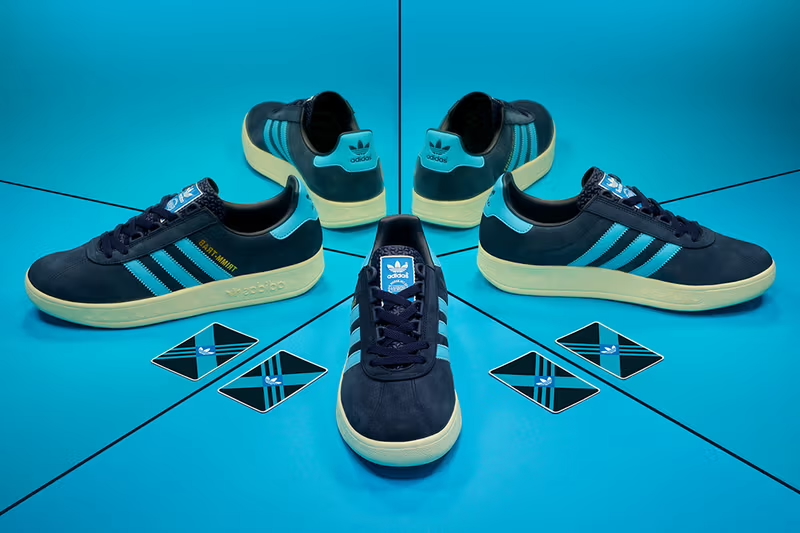
The Adidas Trimm Trab tells this passage well. Born in Germany in the Seventies as a training shoe, they were discovered by English fans on European away days and brought home. They hadn’t been designed as a cult object, but they became a signal for those who could read them: travel, taste, belonging.
Twenty years later, in 1999, Blur named a song after it: “Trimm Trabb”. The name of a shoe had become loaded enough to carry a song on its own.
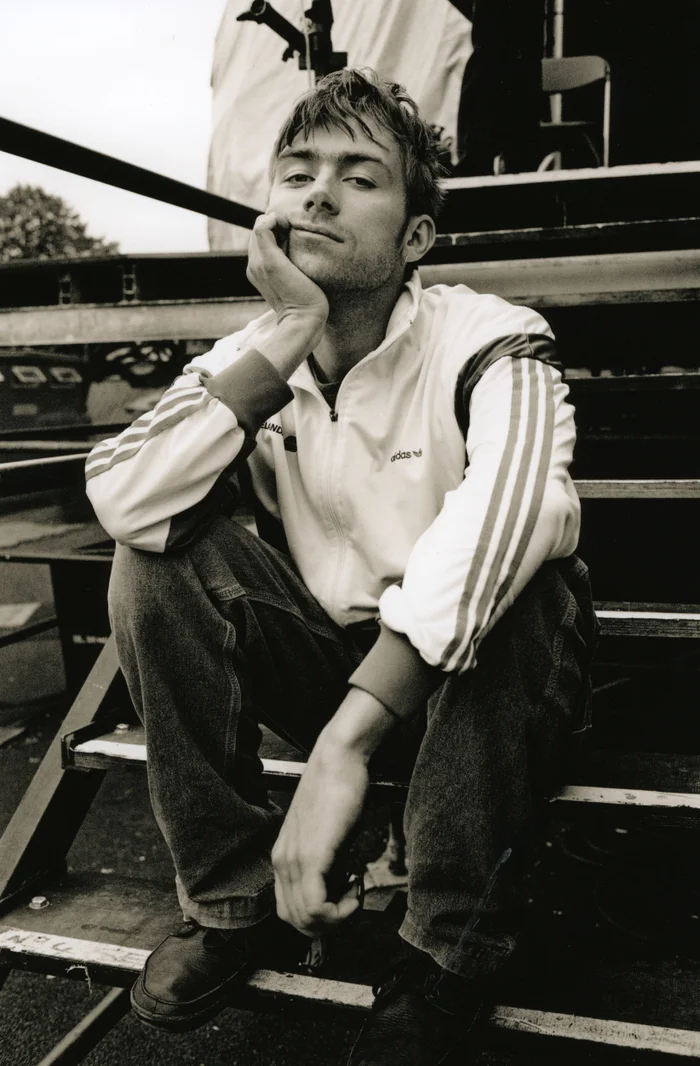
The same logic runs through other subcultures. In the mod world, for instance, identity sits in the details: the right shirt, the right shoe, the right record, the right way of being inside a scene. Adidas didn’t start as a mod brand, but models like the Gazelle, Samba and Spezial fit naturally into that visual discipline: clean shapes, low profile, simplicity, control.
It’s one of the reasons Adidas can cross different environments without looking out of place. It has enough identity to be recognisable, but enough simplicity to be reinterpreted.
When marketing arrives later
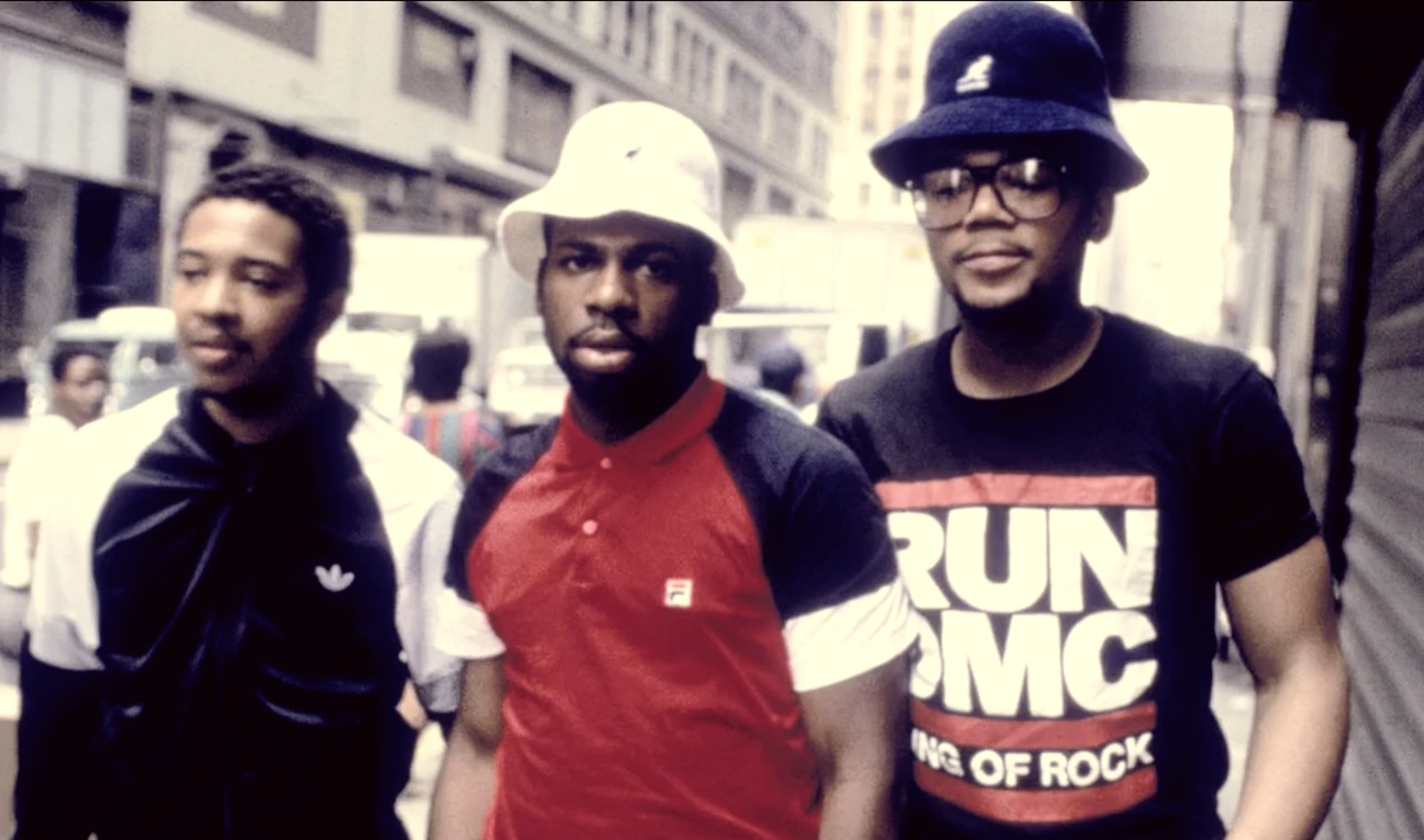
The hip-hop connection shows clearly how a second life can begin outside the official channels. When Run-DMC wore Adidas, the brand wasn’t working as a normal sponsorship. It was part of a reality already being lived. The sneakers, the tracksuits, the way of wearing them: it all existed before marketing really understood its value.
A brand can pay to be seen, but it can’t simply buy credibility. In Adidas’s case, the legitimacy came first from the street. The commercial relationship came later.
The same mechanism, in a very different context, shows up in indie and Britpop. Here Adidas didn’t enter as a symbol of sporting performance, but as familiar clothing, already present in the daily life of the people who listened to that music. On bands like Oasis, Adidas works because it doesn’t put distance between the artist and the audience. It closes it.
A track top, a pair of Gazelle, a parka, a football shirt: these aren’t stage costumes. They’re things you could just as easily see outside the venue, on the people queuing up to get in. That very normality is what makes them credible.
Britpop didn’t invent Adidas’s meaning. It made it more visible, turning an already existing code into a collective imagination.
When a brand escapes its creator
From the brand’s point of view, this is the point. The company designs the logo, the product, the positioning, the campaigns. But then the brand enters real life, and there something unplanned can happen. It can be picked up, moved, adopted, modified. It can start saying things that weren’t in the original brief.
Adidas had been designed for sport. But people also used it to talk about class, taste, music, territory, nostalgia, attitude, belonging.
A brand becomes really strong when it can survive that loss of control. Or rather, when it becomes more interesting precisely because someone uses it in a way that wasn’t planned.
A second life can’t be decided in a boardroom
Today many brands try to artificially build new meanings to reach new audiences: collaborations, limited drops, community plays, nostalgia. Sometimes it works, but often the attempt feels forced.
The difference is that a second life can’t be manufactured. It can only be recognised, accompanied, amplified.
Adidas was born and grew on the pitch. Its second life begins when it walks out of the changing rooms and onto the terraces, into clubs, into concerts. On people who don’t wear it just for sport anymore, but to say something about themselves.